Network History
NPTN and FreePort: The Network Behind the Free-Nets
The National Public Telecomputing Network licensed the Free-Net name and shipped FreePort software. Its rise and collapse.
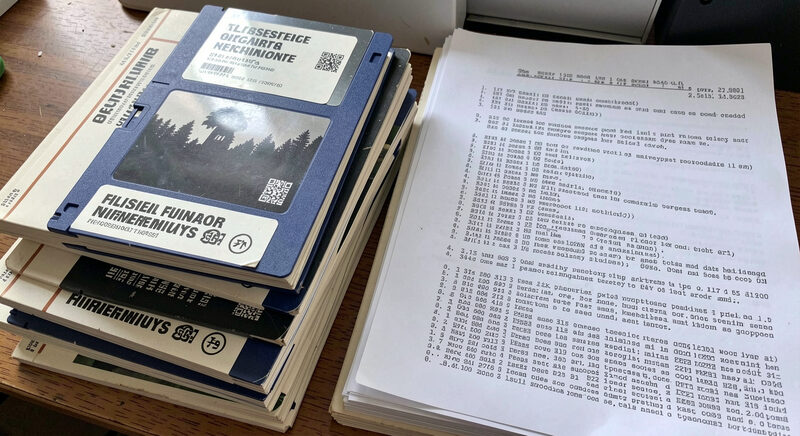
The free-net movement was never a single system. It was a pattern repeated in dozens of cities, and the organization that tried to hold the pattern together was the National Public Telecomputing Network. NPTN supplied the movement's shared name, its software and for a few years its center of gravity, before collapsing in a bankruptcy that scattered its affiliates.
One idea, many cities
NPTN was founded in 1989 by Tom Grundner, the same Case Western Reserve figure behind the Cleveland Free-Net. The timing was deliberate. Cleveland's model was working, other cities wanted to copy it, and someone needed to package the idea. NPTN became that packager: a nonprofit dedicated to establishing free, public access computing services for the general public.
The vision was a federation. Each free-net would remain locally governed and locally funded, but affiliates would share a name, a software platform and a loose national identity. In the early 1990s, with the internet still largely unknown to the public, the pitch was persuasive.
The Free-Net trademark
NPTN registered Free-Net as a trademark, which gave the name legal protection and gave the organization a lever over who could use it. The intent was quality control: a system calling itself a free-net should be free at the point of use, community-run and open to residents. The trademark also created friction, because free-net existed in the wild before the registration and communities used it loosely.
The tension never fully resolved. Some systems joined the federation formally, some used the name informally, and some chose alternatives such as community network to stay clear of the dispute.
FreePort: the software that carried the model
The movement's practical engine was FreePort, a software package developed at Case Western Reserve that implemented the free-net experience: accounts, menus organized as community departments, email, discussion areas and information-provider space. NPTN distributed FreePort to affiliates for a nominal license fee, famously one dollar.
That pricing mattered. A university, library system or civic group that wanted to start a free-net did not need to write software; it needed hardware, phone lines, volunteers and a license that cost less than a cup of coffee. The low barrier is a large part of why free-nets multiplied so quickly in the early 1990s.
What did affiliates get besides software?
Affiliation brought more than code. It brought a doctrine: the Madison quotation about popular government depending on public information, the community-building framing, the information-provider model that put nonprofits on the system. It also brought a network of peers solving the same problems, from modem capacity to volunteer burnout.
What it did not bring was money. Each affiliate still had to find its own sponsors, equipment and phone lines, which is why systems like the Greater Houston Free-Net leaned on local providers such as NeoSoft.
The limits of a trademarked commons
NPTN's history holds a quieter lesson that still applies to community projects. The trademark was meant to protect quality, but it also meant a community system built on volunteer labor could be told it could not call itself what everyone already called it. Several systems sidestepped the issue by branding themselves community networks or FreeNets without the hyphen. The episode foreshadowed a recurring tension in civic technology: shared branding helps a movement scale, and shared ownership of that branding is what keeps it from becoming a gate.
The 1996 collapse
NPTN's end was abrupt. In 1996 the organization filed for Chapter 7 bankruptcy and closed. The causes were structural: a national office with thin revenue, affiliates that valued independence over dues, and a moment when commercial internet access was beginning to make the free-net pitch harder to fund.
The bankruptcy did not end the free-nets themselves, because the federation had always been loose. Affiliates kept running on local support, and the FreePort systems kept answering modems. What was lost was the coordinating center: the shared advocacy, the software stewardship and the sense of a single movement.
What the federation could not solve
NPTN's central problem was that it coordinated without funding. The affiliates were independent nonprofits with their own budgets and boards; the center could advise, trademark and distribute software, but it could not pay an affiliate's phone bill or force a shared strategy. When the internet market turned, each system faced the change alone, and the responses ranged from managed decline to quiet disappearance. The federation model produced breadth, dozens of cities, at the price of depth, no shared endowment or reserve that might have carried members through the transition.
What outlived it
Two inheritances survived the organization. The technical one is the hosted-community-page model, described in the community homepages guide, which prefigured everything from nonprofit web hosting to neighborhood platforms. The civic one is the premise that public access to information is a community responsibility, a premise now carried by libraries, municipal networks and inclusion programs covered across Public Access. The Wikipedia article on the free-net documents the NPTN chapter, including the trademark and the FreePort distribution.
For the historian of the movement, NPTN is also the moment the free-net tried to become a national institution and discovered the limits of doing so on volunteer goodwill alone. The affiliates kept their communities; what they could not keep was the center.