Network History
The Greater Houston Free-Net and Its Community Pages
GHOFN offered Houston residents free internet access and hosted nonprofit homepages from 1997. What the system offered.
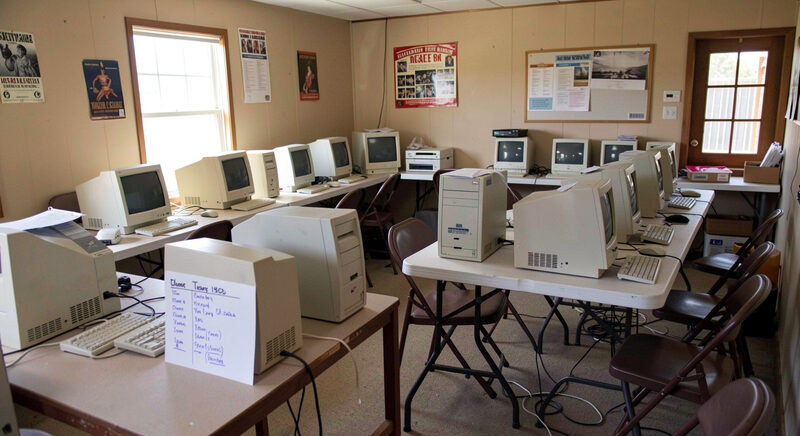
This site lives on a domain with a documented past. From 1997, ghofn.org was the public address of the Greater Houston Free-Net, a community computing project that set out to give Houston-area residents free internet access and to give local nonprofits their first pages on the web. What survives of the system, mostly in web archives and in links left on other sites, is enough to reconstruct what it was and what it offered.
A city-sized on-ramp
The earliest archived homepage, captured in mid-1997, describes the project in its own words: a community computing network whose goal was to build a telecommunications center for the greater Houston area, providing access to the internet and housing community-oriented homepages on its computers. The same page notes that the project was in its first stages, planning, organizing and recruiting volunteers, and invites readers to check back as the work advanced.
The model followed the pattern set a decade earlier in Cleveland: a civic mission, donated infrastructure and volunteer labor. The Houston system's page credits NeoSoft, one of the city's early internet providers, with the contributions that made the service possible.
What the menu offered
The 1997 homepage lists the sections a visitor could enter. Arts and entertainment, libraries and museums, education and government, a business exchange, community organizations, religious organizations, a directory of free-nets worldwide and a community calendar all appear, organized like departments of a town rather than folders of a server. A help desk, a frequently asked questions page and a members directory called HouWho rounded out the service.
The structure is the FreePort-era pattern described in the NPTN guide: the community came first, and the technology stayed out of the way.
Who used the system
Two kinds of users left traces. Individual members received accounts and email addresses on GHOFN hosts; addresses ending in ghofn.org appear in late-1990s mailing list archives, including one on the host freebird.ghofn.org. And community organizations became what free-nets called information providers, publishing their own pages under the system.
The best documented of those pages belonged to a Bach Society at a Houston Lutheran church, which posted concert seasons under the system's community directories, and to Cenikor, a Texas substance-use treatment organization, which published an evaluation report there. Both are examined in the guide to community-hosted homepages.
How it fit the wider movement
The Houston project arrived late relative to the flagship systems. Cleveland had been running for a decade when GHOFN's first captured page described the network as being in its first stages of development, and the national federation that had supplied the shared name and software was already gone, its Chapter 7 filing in 1996 covered in the NPTN guide. That timing explains both the ambition and the fragility: Houston was building a dial-up civic network exactly as commercial providers began making private access affordable, a window that was already closing.
What happened to the network?
The record thins after the early years, and that thinning is itself the usual story. By the early 2000s commercial dial-up was cheap, broadband was arriving, and the volunteer-plus-sponsor model that carried the free-nets was under strain everywhere. Systems dependent on donated capacity faded as sponsors redirected resources and users migrated to paid providers. The Houston system left no public farewell in the archives; it simply stopped being captured as a living site.
What the archives do show is that the domain outlived the network, passing through later uses that had nothing to do with the original project, before arriving at its present role as the home of this journal.
What the archived pages show about the era
The Houston record is worth a close look because it preserves the era's mechanics in miniature. The homepage carried a served-today counter, a small piece of evidence that the system expected traffic and measured it. The directory structure, community sections beside a help desk beside a member directory, shows how a free-net imagined itself: less like a service, more like a civic building with rooms. And the hosted pages show the offer working as intended, organizations publishing through the community's infrastructure because they had none of their own.
Why document it at all
Small community systems are easy to lose entirely. They produced no annual reports and few press clippings, and their records lived on servers that were eventually switched off. What survives for GHOFN is a homepage, a handful of hosted pages, mentions in other people's archives and the domain itself. That is still worth recording, for two reasons.
First, it is a real piece of Houston's internet history: a period when a resident could dial a local number and reach a civic resource that cost nothing. Second, it is evidence for the present. The questions the Greater Houston Free-Net was organized to answer, who gets access and who publishes, are the same questions asked today by the projects covered in Community Builds and by the access points described in the library guide. The original 1997 homepage remains viewable through the Wayback Machine's archive of ghofn.org.
For Houston readers, the practical coda is that the need the free-net was built for did not retire with it. Digital inclusion work in the city today, library access, school device programs, community wireless, runs on the same logic GHOFN articulated in 1997, with better equipment and the same dependence on local will.