Network History
When Nonprofits Got Their First Homepages
Free-nets hosted pages for churches, charities and clubs: how community organizations first appeared on the web.
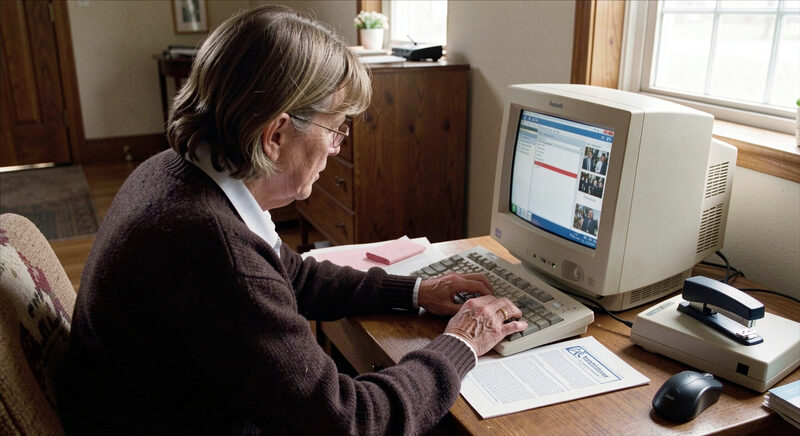
One of the least remembered services a free-net provided was also one of its most useful: a place for local organizations to publish. Years before cheap commercial hosting and site builders, a church choir, a food bank or a neighborhood club could have a page on the web for exactly nothing, because the community network kept a directory of community pages and welcomed what it called information providers.
Before hosting was a product
In the mid-1990s, putting an organization on the web was neither cheap nor simple. Commercial hosting existed but cost real money, registering a domain cost more, and someone still had to write the HTML. For a volunteer-run nonprofit, the combined bill and the skill requirement closed the door. A free-net opened it: the system already had the server, the connection and the technical volunteers, and it wanted local content because local content was its reason to exist.
The arrangement served both sides. The organization got a public page reachable by anyone with a browser. The free-net got the listings, calendars and reports that made it a useful civic resource rather than an empty terminal.
The information provider model
The term the systems used was information provider. An organization applied, received a directory on the system, and published its material there, usually as simple hand-written pages: a mission statement, a calendar of events, a contact address, a season's program. The 1997 homepage of the Greater Houston Free-Net states the offer plainly, describing a system that housed community-oriented homepages and actively encouraged nonprofit groups to get their message out via the web.
Directory structures varied. Some systems gave organizations a tilde account tied to a login, others gave them a named folder. Either way, the result was a stable public address the organization could print on flyers and newsletters.
What the hosted pages looked like
Two real examples survive from the Houston system. A Bach Society attached to a local Lutheran church published its concert pages under a community directory on ghofn.org, with season schedules going back to the late 1990s; the link was still being recommended by a Bach reference site years later. Cenikor, a Texas substance-use treatment organization, used the same system to publish an evaluation report.
The pattern repeats across surviving free-net records: music societies, scout troops, shelters and clubs, each with a plain page that did its job. The pages were unglamorous and genuinely useful, which is precisely why the model mattered.
Why organizations took the offer
Three motives recur. The first was cost: free is a compelling price for a nonprofit. The second was audience: the free-net was where the local online population already was, so a page there reached exactly the residents the organization served. The third was help: the systems' volunteers often assisted with the page itself, which no commercial host of the era offered at any price a small charity could pay.
What the pages actually did for the organizations
The payoff for an information provider went beyond a web address. A page on the system meant the organization's program could be found by residents who would never walk through its door: a family looking for a concert, a counselor looking for a treatment evaluation, a newcomer looking for a congregation. It also gave small organizations their first experience of maintaining an online presence, skills they carried when they later moved to their own domains. The hosted page was, in retrospect, a training ground for the nonprofit web.
What replaced the hosted homepage
The arrangement did not so much end as scatter. Commercial hosting fell to a few dollars a month, site builders removed the HTML requirement, and social platforms offered a ready-made audience for the price of an account. Each step lowered one barrier and raised another: a social page is easy to create but belongs to a platform, while a free-net page belonged, in a meaningful sense, to the community that ran the system.
Something of the model survives in library-hosted community pages, in nonprofit web collectives and in the local directories that community networks still publish, projects covered in Community Builds.
What the arrangement cost the system
Hosting community pages was not free for the free-net either. Every hosted organization consumed disk space, volunteer time and occasionally editorial judgment, since a page on the system could be mistaken for the system's own voice. The surviving records suggest the trade was accepted as part of the mission: a free-net without local organizations publishing on it was just a dial tone. The pages were the content, and the content was the reason residents dialed in, a dependency that cut both ways when the systems began to wind down.
The lesson worth keeping
The hosted homepage era contains a quiet warning. When the Greater Houston Free-Net wound down, the pages it hosted wound down with it; a domain later reused for unrelated purposes is the visible remnant. An organization that publishes only on borrowed infrastructure is renting its memory. The modern equivalent of the free-net's advice is simple: keep a copy of what you publish, prefer an address you control, and treat any platform, however generous, as a host rather than a home. The guide on starting a community network covers what it takes to run that infrastructure rather than borrow it.
For readers who keep or inherit community pages of that era, the archives are the reference: the Wayback Machine preserves many hosted sites, and local history collections increasingly want them. A homepage saved today is a record someone will thank you for in twenty years.