Network History
What Was a Free-Net? The Community Internet Explained
Free-nets gave the public free dial-up access to local information and early internet in the 1980s and 1990s. How they worked.
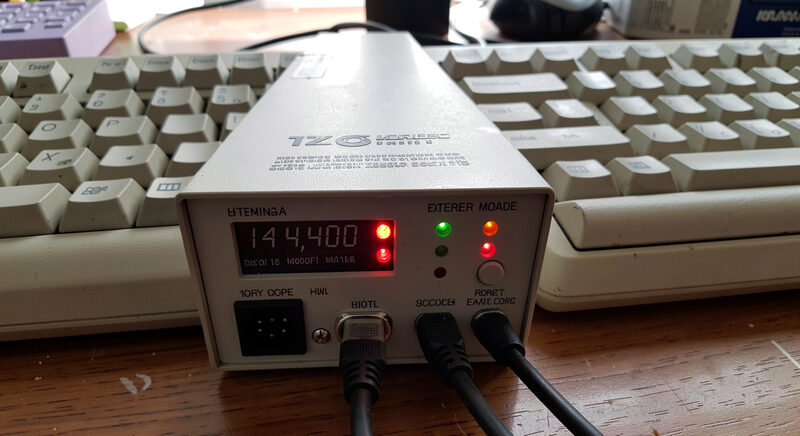
Ask someone who went online before the web was a household utility and a particular word may come back: the free-net. Between the mid-1980s and the early 2000s, dozens of cities ran one. A free-net was a community-owned computer system that anyone could reach with a modem, at no charge, to read local information, send email and, later, reach the internet itself. For a large share of the public, it was the first taste of being online.
A public library card for the network age
The simplest way to place a free-net is to compare it to a public library. The building was a machine room rather than a reading room, the collection was files and discussion areas rather than shelves, and the card was a login account rather than laminated paper. But the promise was the same: a shared civic resource, free at the point of use, open to every resident regardless of income.
That framing was deliberate. The people who built the first free-nets borrowed the library's legitimacy and its structure. Information was organized like a town: a post office for mail, a schoolhouse for education resources, a courthouse square for civic notices. A new user did not need to learn internet jargon; they needed to recognize a menu.
What a session looked like
A session began with a telephone number. The user pointed a modem at it, listened to the handshake tones, and watched a text screen answer. Most systems presented a menu-driven interface rather than a command line. Typing a number or a letter opened a section; nested menus led to community calendars, government notices, support forums, software libraries and, as the 1990s progressed, a text-mode route out to the wider internet through tools like Gopher and the Lynx browser.
Accounts were free but not anonymous by default. Many systems asked for a name and address and had a volunteer or staff member review applications, a process covered in the registration guide. A visitor login usually offered a taste of the system; a registered account unlocked email, discussion groups and longer sessions.
What you could find on a free-net
Content varied by city, but a recognizable pattern repeats across the surviving record. There was a community calendar, listings for libraries and museums, education and government information, health resources, and special interest groups where users argued about everything from evolution to orchids. Local nonprofits could become information providers, publishing their own pages or menus on the system, an arrangement described in the guide to community-hosted homepages.
What the user got, in effect, was a civic newspaper, a bulletin board and a mailbox, reachable from a kitchen table. For residents without a computer at home, many systems also ran public terminals in libraries and community centers.
Who ran the system
Behind every free-net was an unusual coalition. Universities donated equipment and staff time, telephone companies and early internet providers contributed connectivity, and volunteers did almost everything else: answering the help desk, moderating forums, recruiting information providers and writing documentation. The Cleveland Free-Net, covered in its own guide, counted hundreds of volunteer operators at its peak.
Money was chronically tight. Hardware aged, modems multiplied, and the line between a civic service and a commercial product blurred as commercial providers spread. Several systems relied on a single institutional sponsor, which made them fragile when budgets shifted.
How is a free-net different from a BBS or an ISP?
The free-net is often confused with two neighbors. A bulletin board system was usually one computer and one phone line, run as a hobby; a free-net was an institution, with governance, funding and a civic mission. A commercial internet service provider sold a pipe and left content to others; a free-net curated community information and gave it a home.
The cleanest distinction is the business model. A BBS was a clubhouse, an ISP was a shop, and a free-net was meant to be a public square. The National Public Telecomputing Network, profiled in the NPTN and FreePort guide, tried to federate those squares under a shared name and a shared software package.
How the free-nets were funded
Almost nothing about a free-net generated revenue, which is why their funding stories read like patchwork. The recurring pattern combined a host institution that donated space, machines and staff time, a connectivity sponsor, often a telephone company or a young internet provider, and small membership donations or fundraising drives. Some systems eventually introduced voluntary supporting memberships to stabilize the budget, a step that tested how free a free-net could stay while still paying its phone bill.
The fragility was built in. When a single sponsor covered the expensive parts, one budget review could end the service, which is what ultimately happened in Cleveland.
How many free-nets were there?
Exact counts are hard to pin down because the movement was loose and some systems used the name without joining the federation. What the record shows is a rapid spread through the early 1990s: after Cleveland and Youngstown in Ohio, free-nets appeared in Detroit, Buffalo, Denver, Ottawa, Houston and dozens of other cities, along with systems in Finland, Germany and elsewhere abroad. Each was locally governed, so they differed in size and polish, from university-backed operations with hundreds of phone lines to volunteer systems running on a handful of donated modems. What they shared was the offer: free access to community information for any resident who could dial in.
Why the model faded
Three forces converged in the late 1990s. Commercial dial-up and then broadband made private access affordable for many households. The graphical web outpaced text menus, and rebuilding a free-net for the web cost money the volunteers did not have. And the institutional sponsors that carried the big systems, universities above all, redirected their budgets toward their own networks. Cleveland closed in 1999; most others wound down within a few years on either side of it.
What it left behind
The free-net era produced three durable things. It created the expectation that community information should be free to read. It trained a generation of volunteers, librarians and organizers in the practical craft of public access, a role now carried by the institutions covered in the library access guide. And it left a question that still drives local projects described in Community Builds: if the market does not connect everyone, who will?
The most readable overview of the whole movement remains the encyclopedia entry on the free-net, which traces the concept from its health-science origins through the Cleveland system and its successors. For the practical next step today, the library computer row is the closest living relative of the free-net terminal.